
Last updated November 16, 2026
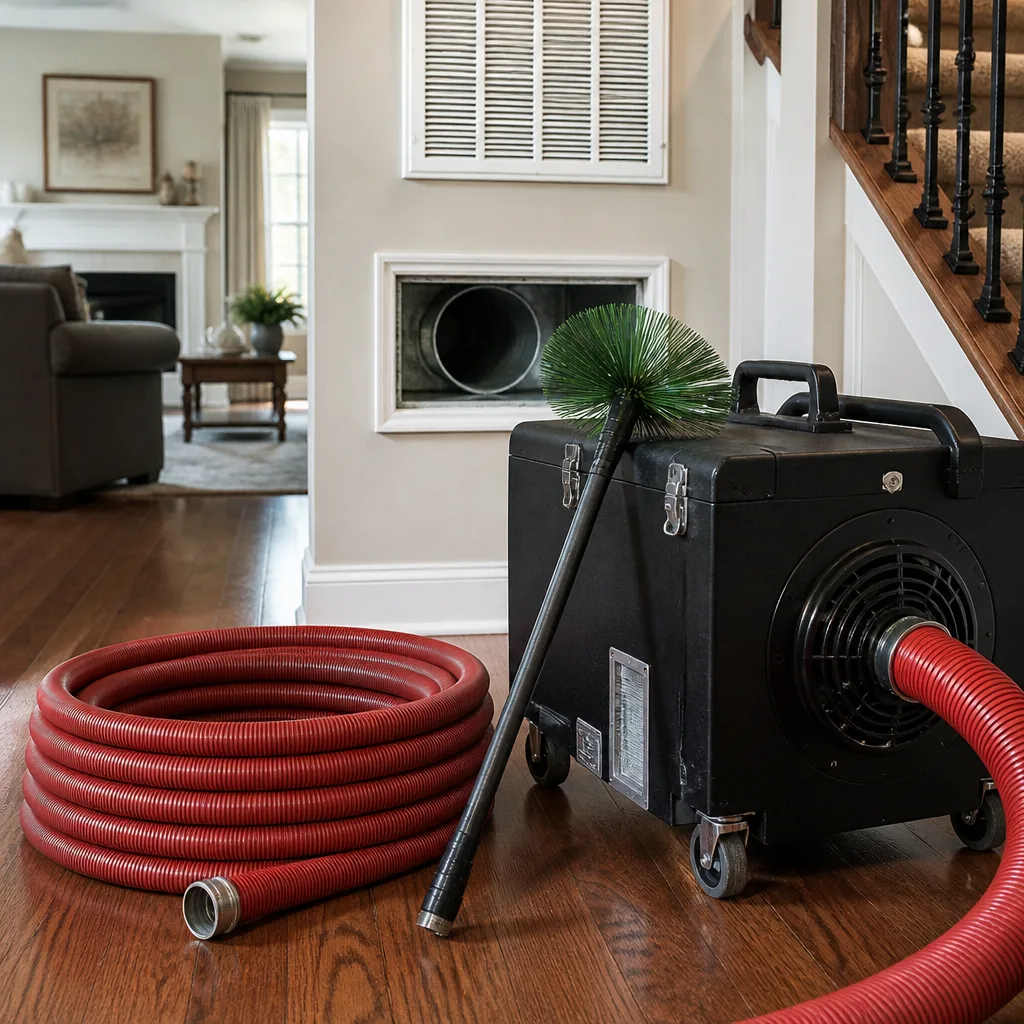 Whole-home duct cleaning
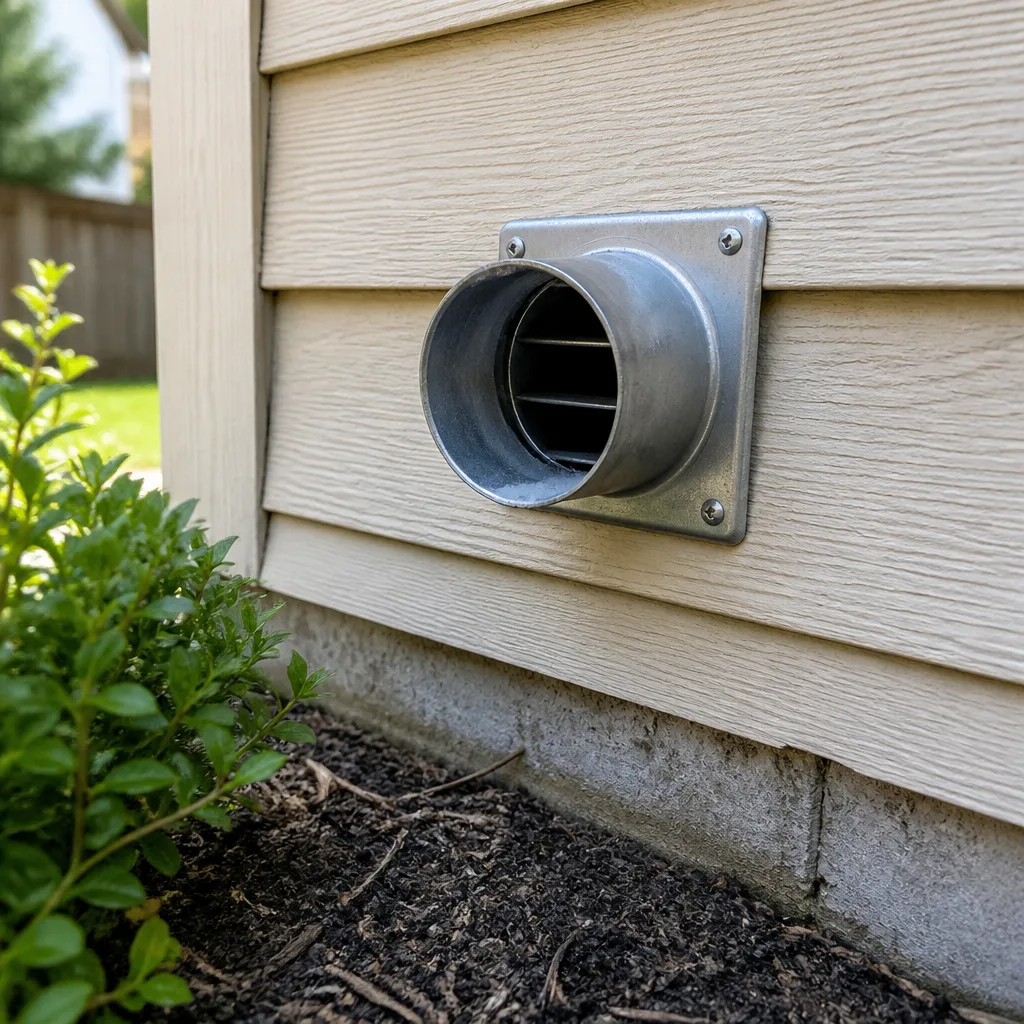 Dryer vent cleaning
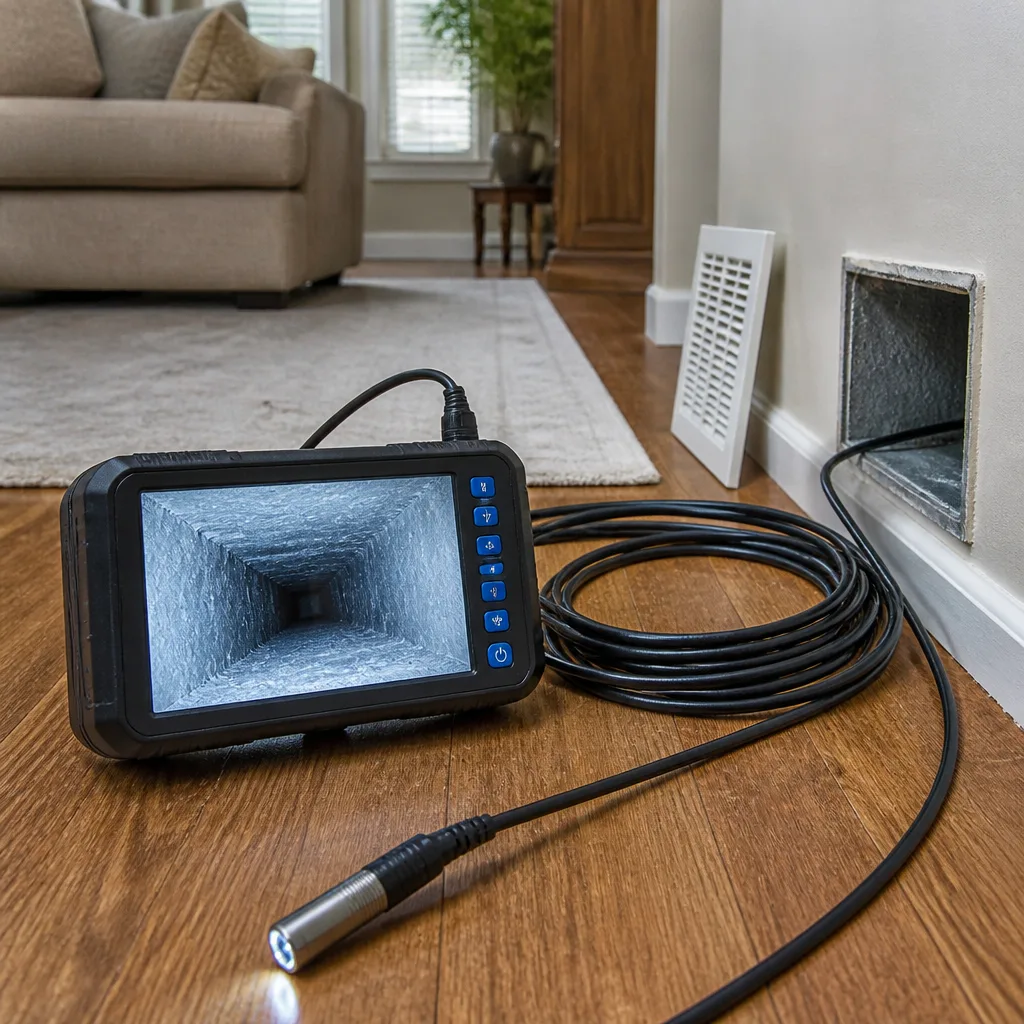 Camera inspection
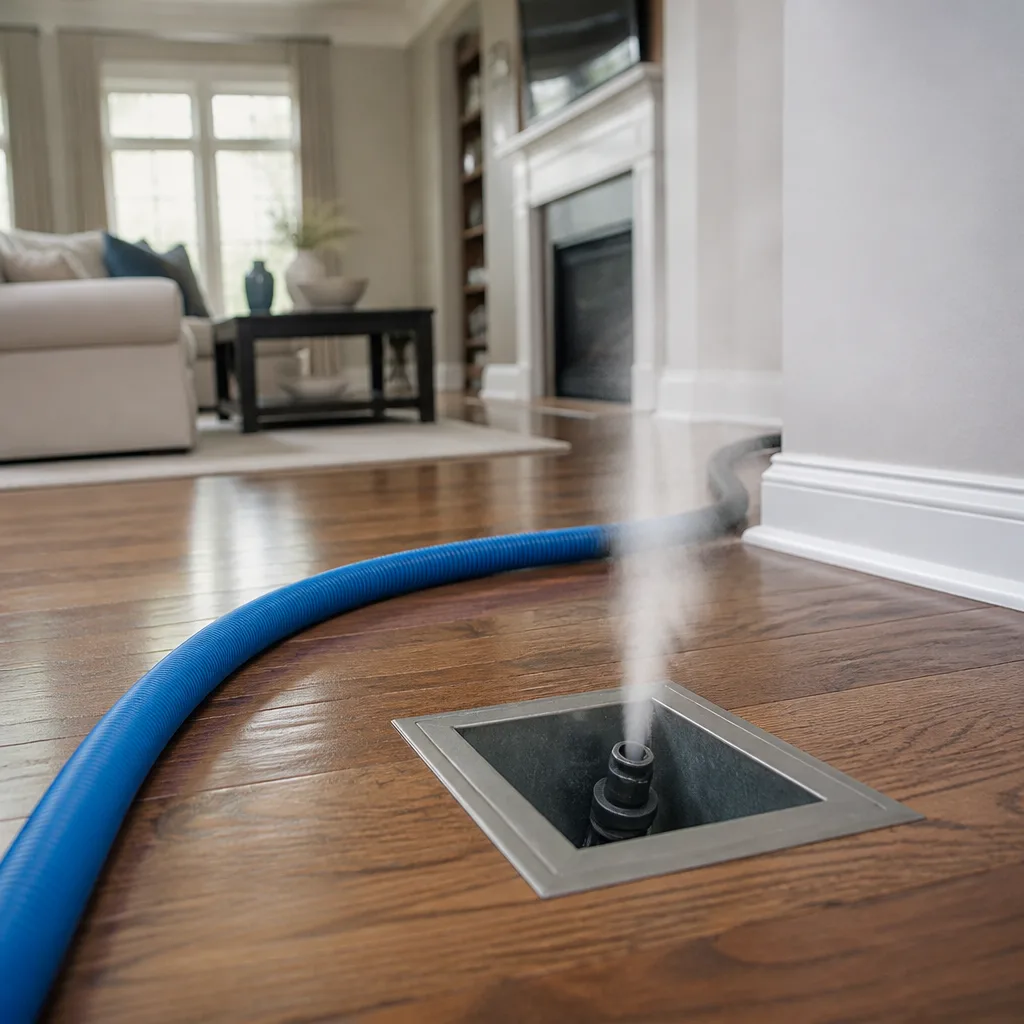 Sanitizing & deodorizing
Whole-system duct and dryer vent check with before-and-after photos - you see exactly what came out of your vents
That "$99 whole-house special" is a bait ad - the real number appears once they are in your hallway, or the "clean" is a shop-vac at the register. We photograph the inside of your ducts before and after instead.
The Complete Guide to Air Duct Cleaning in Paterson
Most people assume the dust they see on the vent covers is the real problem. It isn’t. The dust that settles on the grille is the dust that didn’t make it into your air, and it’s easy to wipe away. The material that matters is the layer sitting inside the duct runs, the blower wheel, and the coil, the parts you never see, and in a city with Paterson’s housing stock, a lot of it has been sitting there a long time. We wrote this guide to walk you through what a legitimate cleaning actually involves, tool by tool, so you know what you’re paying for before anyone shows up at the door.
Quick Answer
Air duct cleaning in Paterson is a source-removal process: the system is put under negative pressure with a HEPA vacuum, the ducts are agitated with rotary brushes or air whips, and the debris is collected rather than pushed around the room. It’s not a quick pass with a shop vac, and it isn’t finished until the air handler, blower compartment, and coil have been addressed and the results verified with a camera. The whole job usually takes a few hours depending on the size and condition of the system.
Styles & brands we work with
- Whole-home duct cleaning
- Dryer vent cleaning
- Camera inspection
- Sanitizing & deodorizing
Table of Contents
- Why Paterson Ductwork Is Different
- Galvanized Steel Versus Modern Flex Duct
- Source Removal Versus Contact Vacuuming
- The Full Sequence of a Legitimate Job
- Why the Air Handler and Coil Can’t Be Skipped
- The Equipment That Separates Real Work From Theater
- Dryer Vent Cleaning Is a Safety Service
- When Cleaning Isn’t Enough: Duct Repair
Why Paterson Ductwork Is Different
A significant share of Paterson’s residential housing went up before 1980. That single fact changes almost everything about how a duct cleaning should be approached. Systems from that era were often built around original galvanized steel trunk lines, sometimes with later flex-duct additions spliced in during a furnace replacement or an air conditioning install. Those systems may never have been professionally cleaned. We’ve opened return plenums in older homes and found construction debris from the original build still sitting in the bottom of the trunk.
Then there’s the air itself. Paterson sits close to Route 20 and a dense industrial corridor, and the particulate load that comes with that urban positioning is heavier than what a suburban New Jersey home on a quiet cul-de-sac pulls into its return. Every time the system runs, it draws in whatever is suspended outside, and the filter catches some of it. The rest accumulates in the duct lining, on the blower wheel, and across the evaporator coil fins. Multiply that over years of operation and you get a system that’s moving less air than it was designed to move.
Housing age and air quality compound each other. Older galvanized systems in Paterson often have more seams, more joints, and more places for debris to collect than a modern sealed system. If you live in an older multi-family building, an attached row house, or a converted property, the ductwork can also be shared or partially shared in ways that make proper isolation during cleaning essential. That’s a job for equipment built to handle it, not a shop vac and a long hose. If you want the short version of how we approach the work, our air duct cleaning page covers the service in brief.
Galvanized Steel Versus Modern Flex Duct
Not all ductwork responds the same way to cleaning tools. Understanding the difference helps you ask better questions when you’re getting quotes.
Older galvanized steel ducts
- The metal is rigid, which means it can handle a rotary brush without damage, and the brush is usually the best tool for scrubbing the walls free of caked-on debris.
- Seams and joints are the collection points. Debris piles up along the folded edges where panels meet, and a brush running the length of the run digs it out.
- Older steel can have surface rust or loose seams that need to be checked before cleaning and repaired after. If a seam is failing, cleaning alone won’t fix the air loss.
- Some homes from that era used internal duct linings or wrap materials, and those need to be assessed before any mechanical agitation to make sure the cleaning method matches the material.
Modern flex duct
- Flex duct has a ribbed interior that traps debris in the grooves. Aggressive rotary brushing can damage the liner, so air whips and gentler agitation are often the right call.
- The ribbing also means more surface area and more places for debris to hide. A quick vacuum pass doesn’t touch most of it.
- Flex runs are more prone to sagging, kinking, and disconnection. A cleaning inspection is also a chance to find a run that’s been disconnected and blowing into a crawlspace or wall cavity instead of a room.
If you’re in one of Paterson’s older neighborhoods and aren’t sure what your ductwork is made of, the inspection at the start of the job will tell you. A technician who can’t describe what they found and what tool they’ll use for it probably isn’t going to give you a thorough cleaning.
Source Removal Versus Contact Vacuuming
Here’s the distinction most homeowners never hear, and it’s the one that matters most. Contact vacuuming means running a vacuum hose along the visible duct openings and the areas you can reach. It’s a surface job. Source removal means the entire system is placed under controlled negative pressure while the ducts are mechanically agitated, so the debris is captured and removed from the system instead of being stirred up and redistributed into the living space.
Source removal with negative pressure and HEPA collection is the standard the National Air Duct Cleaners Association (NADCA) sets for a legitimate cleaning. That matters for a couple of reasons. First, the negative pressure keeps whatever is loosened inside the system and the collection unit, not floating into your kitchen. Second, the agitation tools are what actually free the debris from the duct walls. A vacuum alone pulls at loose dust; a brush or air whip loosens the caked material so the vacuum can capture it.
Contact vacuuming has its place as part of a job, particularly on accessible components and in tight spots. It is not a substitute for source removal. If a quote describes “vacuuming the vents” and nothing else, that’s contact work, and it isn’t a full cleaning regardless of price. For homes in Paterson where the return-side ductwork is heavily loaded, the difference between the two methods is the difference between a system that’s genuinely cleaner and one that just looks cleaner at the grille.
The Full Sequence of a Legitimate Job
A real cleaning follows a sequence, and the sequence is what protects both you and the equipment. Here’s how it should go, step by step.
- Pre-inspection. Before anything is touched, the technician inspects the system: duct type and condition, number of runs, return configuration, access points, and the condition of the air handler. A camera may go into the ducts to document what’s there.
- Protection and system isolation. Floor protection goes down, and the registers and any open access points are handled so debris doesn’t end up on your floors. The system is isolated where needed, and the collection equipment is connected.
- Negative pressure and HEPA collection. The HEPA vacuum brings the system under negative pressure. From this point on, loosened material is being pulled toward the collection unit, not toward your rooms.
- Agitation. Rotary brushes run the length of rigid metal runs. Air whips and other pneumatic tools work through flex duct and branches where a brush would be too harsh. The tool choice is matched to the duct material, not picked for convenience.
- Air handler and coil. The blower compartment and evaporator coil are cleaned as part of the job. Skipping them leaves a loaded component that will recontaminate the ducts you just cleaned the moment the system runs again.
- Post-inspection with camera verification. The technician runs the camera back through the system to confirm the ducts are clean and to check for damage, disconnected runs, or sealant that’s failed. You should see what the camera sees.
That last step is where before-and-after photos come from, and it’s the one that answers the question “how do I know the work was actually done?” A company that can’t show you its own footage of your own system is asking you to take the result on faith. We don’t think you should have to.
Why the Air Handler and Coil Can’t Be Skipped
The ducts are only half the system. Air moves through the return, into the air handler, across the blower wheel, across the evaporator coil, and out through the supply side. If the ducts are cleaned but the air handler is left alone, you’ve cleaned the road and left the engine full of dirt.
The blower wheel is a common offender. It’s a finned wheel that pulls air through the system, and the fins collect dust the way a fan blade collects it. A loaded blower wheel moves less air and can be visibly caked on one side, which throws off balance and makes the motor work harder. The evaporator coil is the other big one. It’s a dense finned matrix, and when dust and debris settle into the fins, it blocks heat transfer, which means the system runs longer to do the same job.
In our experience, a cleaning quote that doesn’t list the air handler, blower compartment, and coil as part of the scope is incomplete regardless of what it costs. The coil and blower are where indoor air quality problems often start, and they’re the components most likely to be left out of a cheap quote. If the job you’re quoted doesn’t address them, ask why. If you’re looking for a system where all three services sit under one provider, cleaning, dryer vent cleaning, and repair, ask about that too. Getting the scope in writing before work starts is what prevents a surprise on the invoice.
The Equipment That Separates Real Work From Theater
You can usually tell how serious a duct cleaning operation is by the equipment that shows up. Consumer-grade vacuums and shop vacs don’t have the airflow, filtration, or containment to handle a whole-house system. What they do is make noise and collect dust at the surface.
Professional-grade work uses duct cleaning systems built for the job. Rotobrush systems combine a powered rotary brush with HEPA filtration in a platform designed specifically for residential duct cleaning. Nikro equipment brings the vacuum and agitation side of the same equation. Both are the kind of platforms specified on commercial and remediation projects, not homeowner tools dressed up for residential work. For jobs involving serious contamination, Abatement Technologies equipment supports containment and negative-air scenarios that go well beyond routine cleaning, the kind of setup a remediation project calls for.
There’s a second layer to equipment, and that’s the indoor air quality side. After the ducts are clean, the question becomes what goes in front of the system to keep them cleaner longer. We work with Honeywell and Aprilaire IAQ product ecosystems, which means filtration and humidity improvements can be planned around the ductwork rather than bolted on separately. Clean ducts plus a filter that matches the system’s needs is a coherent approach. Cleaning alone, with no thought to filtration, is a job half done.
Equipment is a good shorthand for capability, but the real test is whether the technician can explain what each piece does and why it’s being used on your system. Someone who can’t describe the difference between a rotary brush and an air whip, or between HEPA collection and a shop vac, isn’t running a process. They’re running a vacuum.
Dryer Vent Cleaning Is a Safety Service
Dryer vent cleaning isn’t a marketing add-on, and it shouldn’t be treated as one. Lint is highly combustible, and a vent that’s restricted by accumulated lint reduces airflow through the dryer, which raises heat in the exhaust path and raises the risk of a fire. The dryer also works harder and runs longer when the vent is clogged, which shortens the life of the appliance and shows up on your energy bill.
In a city like Paterson, where buildings are often older and some dryer runs are long or have multiple elbows, lint has more places to collect. A run that goes up through a wall and out a roof or side vent is harder to check and easier to neglect than a short straight run. We treat dryer vent cleaning as a dedicated service with its own inspection, its own cleaning tools, and its own verification that the vent is clear end to end.
The signs a vent needs attention are worth knowing: clothes take longer than one cycle to dry, the outside vent flap doesn’t open fully when the dryer runs, the top of the dryer gets hot, or you smell lint. None of those require a dramatic response, but none should be ignored either. A dryer vent cleaning is a short job that addresses a real safety concern, and it belongs on a homeowner’s maintenance list right next to the furnace filter.
When Cleaning Isn’t Enough: Duct Repair
Cleaning only works if the system is intact. If a duct run has come apart at a joint, if a flex run is torn, if a trunk line is leaking at a seam, or if a run is disconnected entirely and blowing conditioned air into a wall cavity, cleaning the inside of that duct doesn’t fix the problem. It cleans a system that’s still losing air.
That’s why air duct repair is a standalone service, not an upsell. The inspection that starts a cleaning is also the inspection that finds the damage. Common findings include:
- Disconnected flex runs at the boot or plenum, common in attics, crawlspaces, and older homes where the connection has worked loose.
- Failed seam tape or mastic on galvanized trunk lines, which leaks air and pulls dust into the system from unconditioned spaces.
- Crushed or kinked flex duct behind a wall or in a tight framing bay, which restricts airflow to a room even when the system is clean.
- Sagging or improperly supported runs that collect debris and reduce airflow.
Repair is the step that makes the cleaning last. Sealing leaks and reconnecting runs means the system moves the air it was designed to move, and it draws less dust from unconditioned spaces like attics and crawlspaces. If a technician finds a damaged run during a cleaning and doesn’t flag it, you’re paying for a cleaning that can’t hold. Ask for the camera footage of the repair the same way you’d ask for it after the cleaning.
Common Mistakes to Avoid
- Hiring on price alone. A low quote that only covers contact vacuuming is a low quote for a reason. Ask what the scope includes before you compare numbers.
- Skipping the air handler and coil. If the quote doesn’t mention the blower compartment and the coil, the job isn’t complete. Those components recontaminate the ducts within days.
- Assuming flex and galvanized ducts get the same treatment. Older Paterson homes often have both, and the tool for one can damage the other. Ask how the technician matches tools to material.
- Accepting a cleaning with no camera verification. Photos and footage of your own system are the only way to know the work was done. A cleaning report without them is a story, not a result.
- Treating dryer vent cleaning as optional. In older buildings with long vent runs, lint accumulation is a fire-safety concern, not a maintenance preference.
- Ignoring a disconnected or leaking duct because the cleaning “looked clean.” A clean duct that’s disconnected from its register doesn’t deliver air where it needs to go. Repair is part of the same conversation.
- Comparing quotes without comparing scope. Two numbers mean nothing unless you know what each one includes. One flat price per system, agreed in writing before work starts, is the comparison that matters.
See the difference
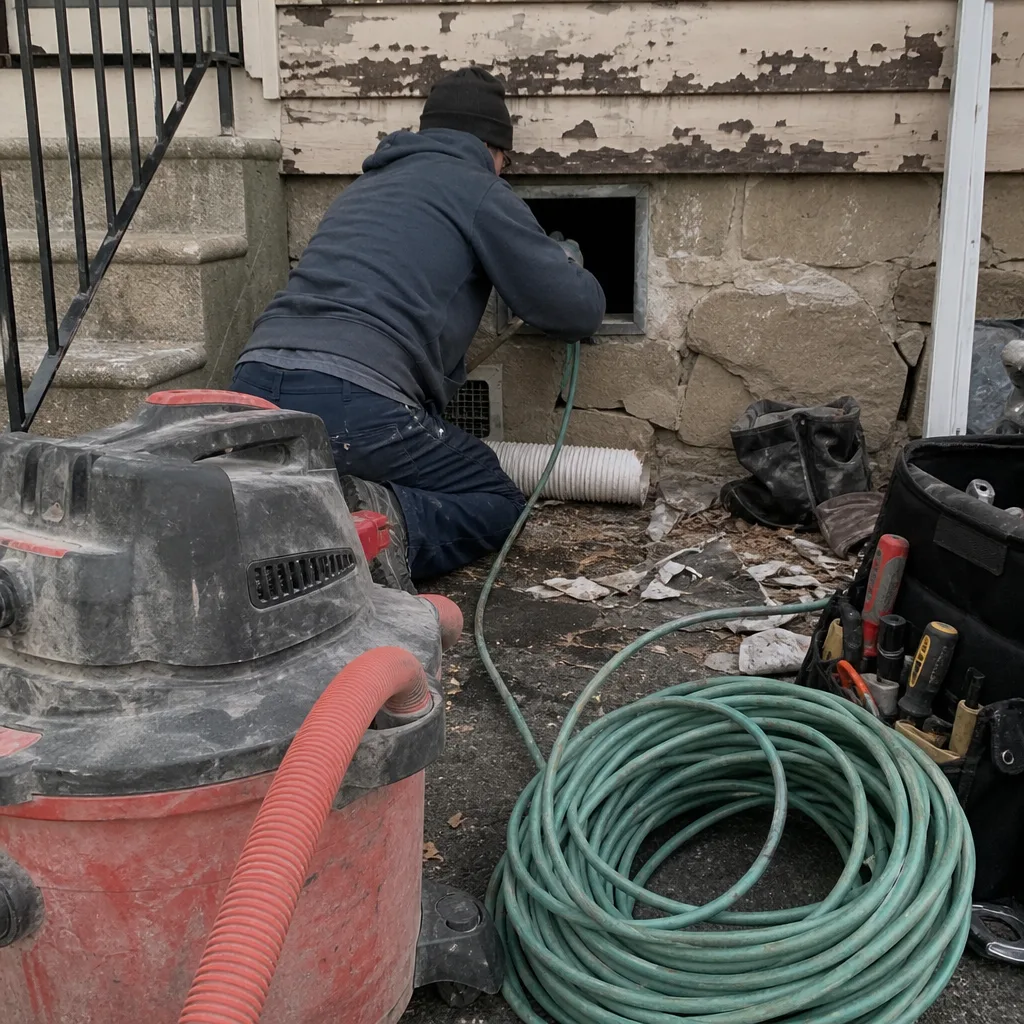 Before
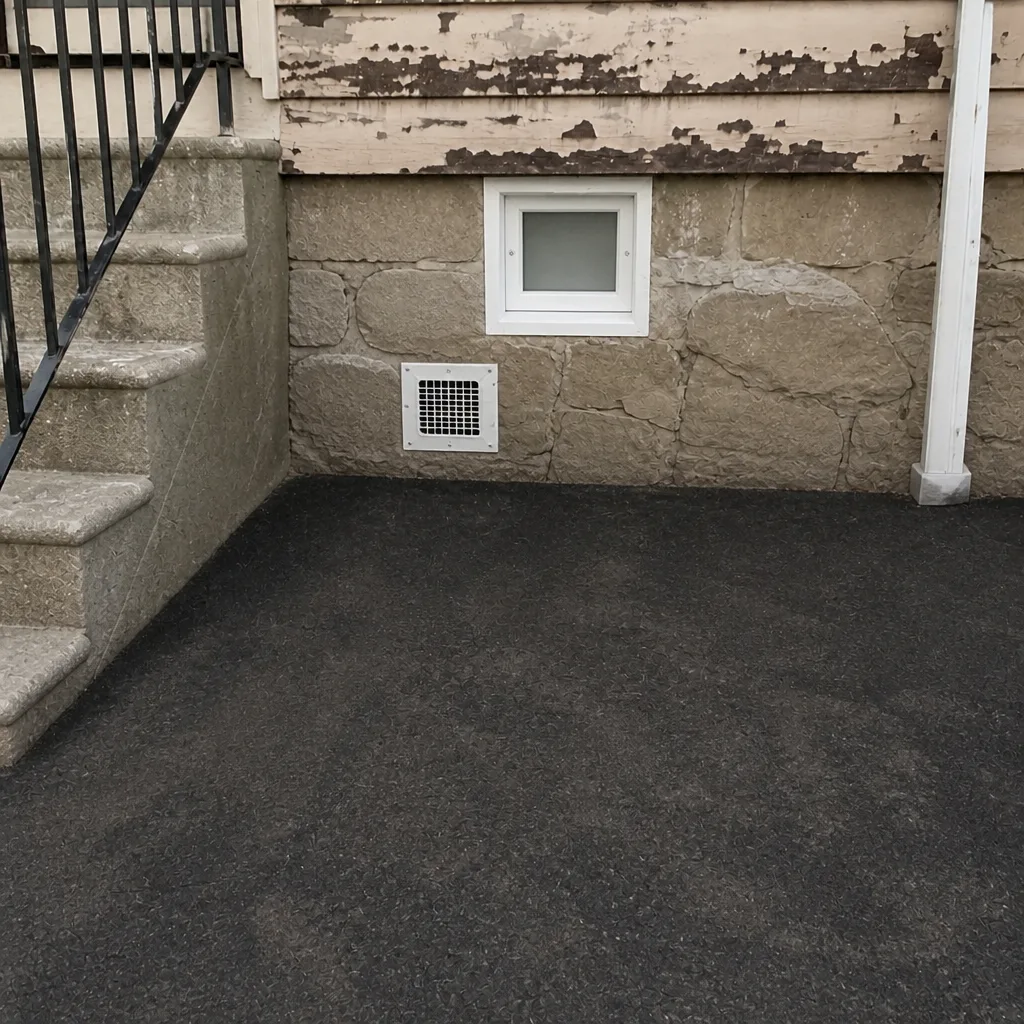 After
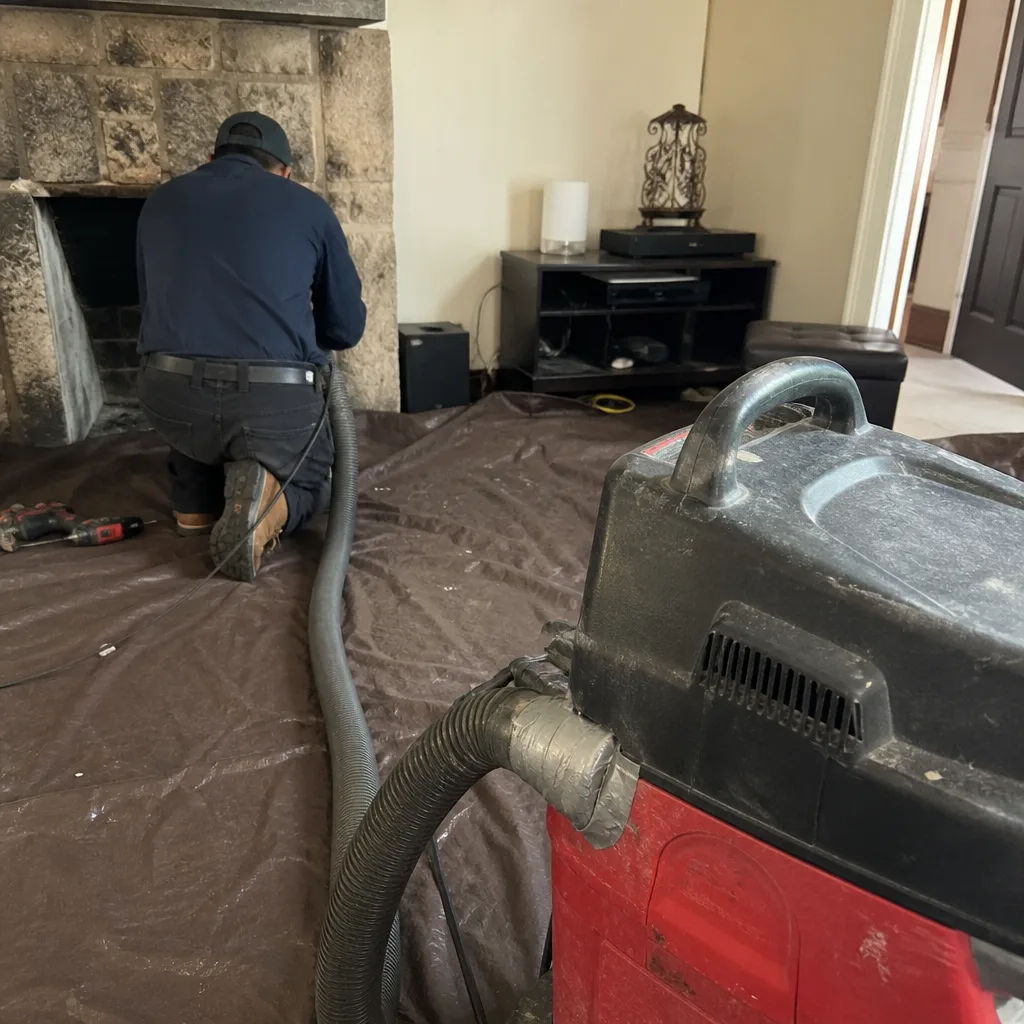 Before
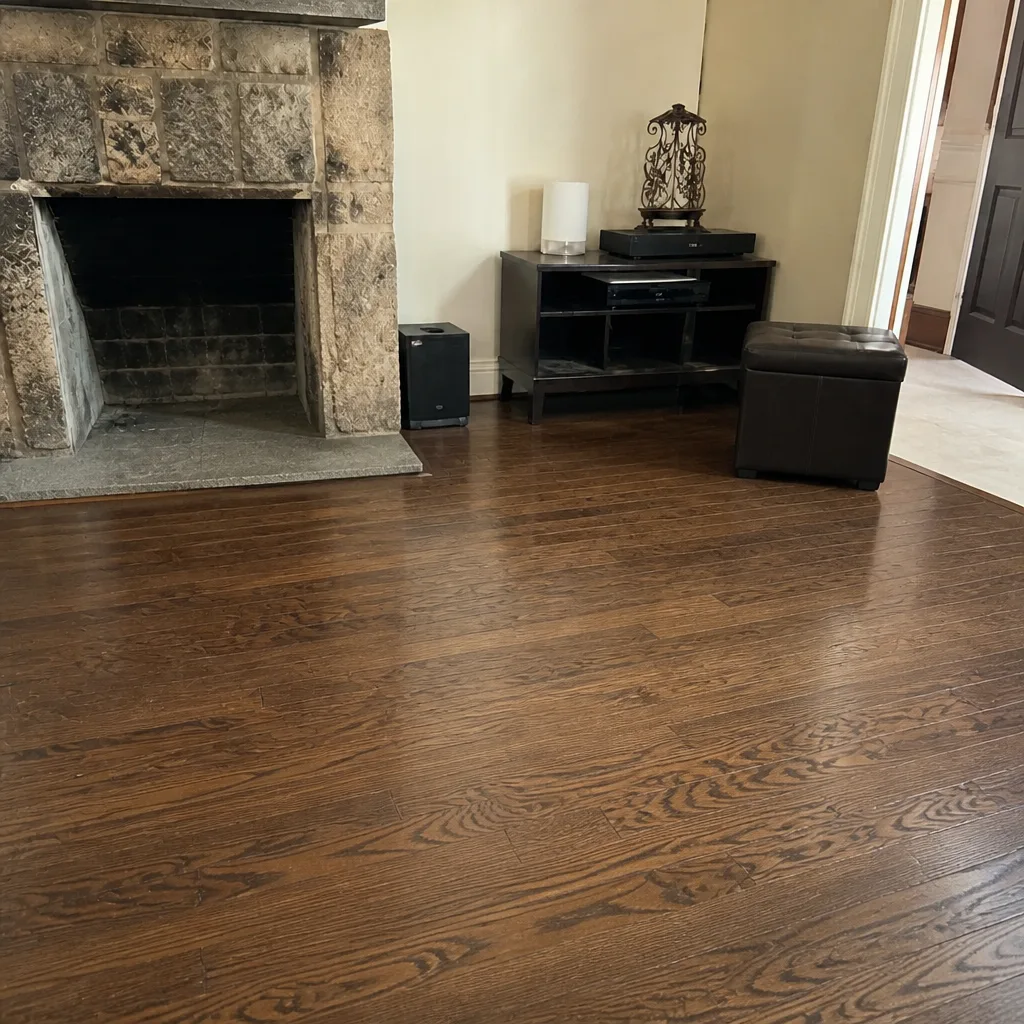 After
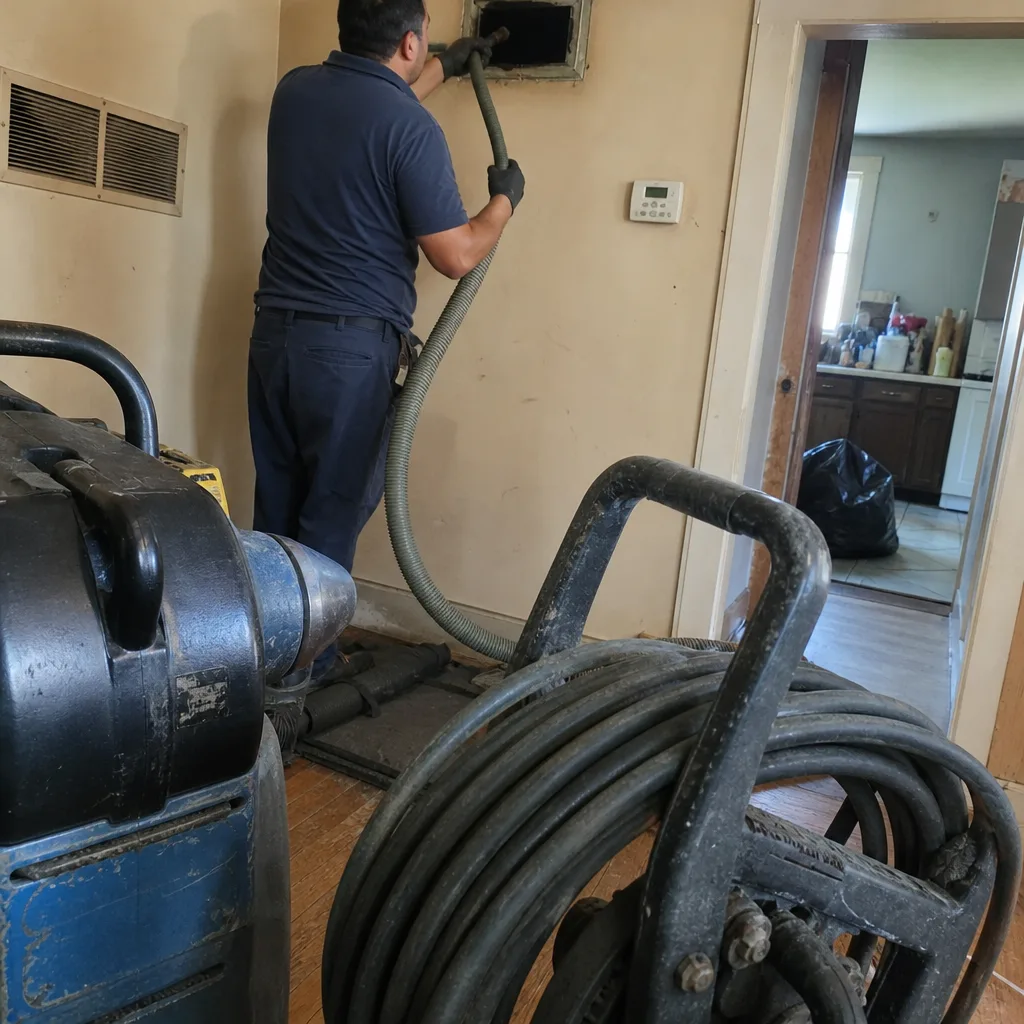 Before
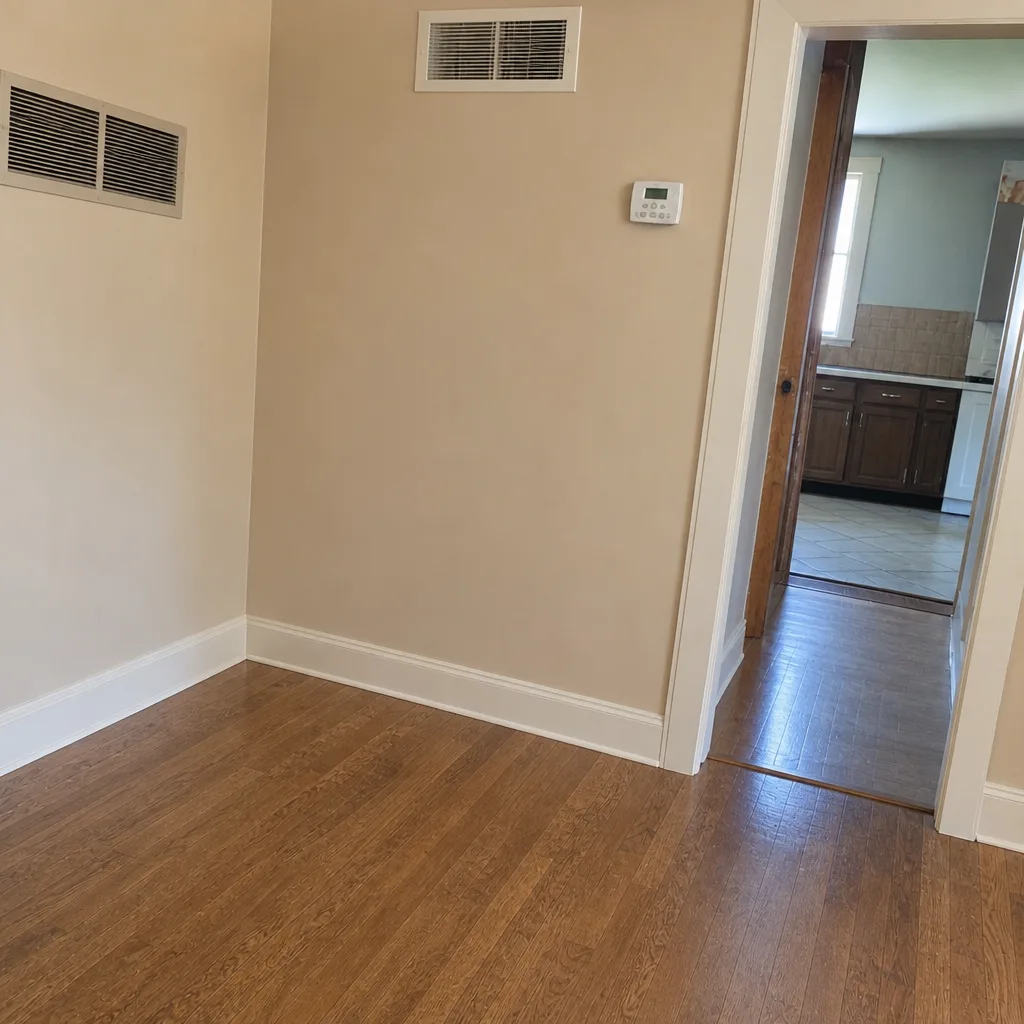 After
When to Call a Professional
Some signs mean the system needs attention now. Visible dust plumes from the registers when the system starts. A musty or stale smell that comes back every time the air runs. Allergy symptoms that get worse indoors and better outside. A heating or cooling system that runs longer than it used to with no change in the weather. Recent renovation work, which pushes drywall dust and construction debris into the return. A dryer that takes two cycles to dry a load, or a vent flap that never fully opens. And any home you’ve just moved into where the duct history is unknown.
Each of those is a reason to have the system inspected by a trained technician, not a reason to panic. Duct Cleaning Paterson offers free estimates in Paterson, call (844) 967-3384. We answer 24/7, and fast dispatch runs from 7am to 7pm, Sunday through Friday. You’ll get one flat price per system agreed before work starts, and before-and-after photos of your own ducts when the job is done.
Frequently Asked Questions
Air duct cleaning in Paterson is priced per system, not per vent, and the final price is set by a written estimate after the system is inspected. The number depends on the number of runs, the duct material, whether the air handler and coil are included, and whether any repair is needed. What matters more than the headline number is the scope: a quote that looks cheap because it skips the coil and the blower isn’t a bargain. Call (844) 967-3384 for a free estimate and a flat price per system.
Cheap quotes are usually cheap because of what they leave out: contact vacuuming instead of source removal, no air handler or coil work, no camera verification, and no repair capability if damage turns up. You’re not comparing the same job when you compare those numbers. The honest fix is to ask every company for the same written scope and compare line by line. One flat price per system, agreed in writing, removes the surprise-at-the-invoice problem. Call (844) 967-3384 if you want a scope you can compare.
You ask to see it. A legitimate cleaning ends with camera verification, and the technician should show you before-and-after footage or photos of your own ductwork, not stock images. You should also get a written summary of what was found, including any damage or disconnected runs. If a company can’t show you the inside of your own system when the job is done, that’s a real question. Call (844) 967-3384 to set up an inspection with documentation.
There’s no universal schedule, and anyone who gives you a fixed interval without looking at your system is guessing. Most homes do well with a cleaning every few years, with the timing driven by what the system actually looks like. Homes in heavier particulate areas, homes with pets, homes that have just been renovated, and homes with allergy-sensitive occupants tend to need it sooner. The right answer comes from an inspection. Call (844) 967-3384 to book one.
Not a problem, but it does change the approach. Pre-1980 homes in Paterson often have original galvanized steel trunk lines, sometimes with flex duct added later, and those systems can hold construction debris from the original build. The cleaning has to match the material: rotary brushes for rigid metal, air whips for flex, and a pre-inspection before either is used. Ask any company how they’ll handle your specific duct material before you book.
If a duct run is disconnected, torn, crushed, or leaking at a seam, cleaning alone won’t solve the problem. The inspection that starts a cleaning will tell you which one you need. Cleaning a system with a disconnected run means conditioning air is still escaping where it shouldn’t, and the duct is still pulling in dust from unconditioned spaces. Repair is the step that makes the cleaning last. Call (844) 967-3384 and we’ll tell you which service your system actually needs before any work starts.
The Bottom Line
Air duct cleaning in Paterson is a process, not a product, and the process is what you’re paying for. Source removal under negative pressure, HEPA collection, agitation tools matched to the duct material, air handler and coil work, camera verification, and repair when the inspection finds damage. Homes in Paterson’s older neighborhoods often have galvanized systems that have never been cleaned and urban particulate loads that speed up buildup, so the scope matters more here than it does in a newer suburban house. One flat price per system agreed before work starts, with before-and-after photos of your own ducts, is the standard to hold any company to. For a closer look at the full scope, visit Duct Cleaning Paterson, and if you’re still mapping the service area, start with Paterson, call (844) 967-3384 for a free estimate.
Written by the team at Duct Cleaning Paterson.